Khaleda Zia’s contribution to Bangladesh’s economic development was far-reaching: Simeen Rahman
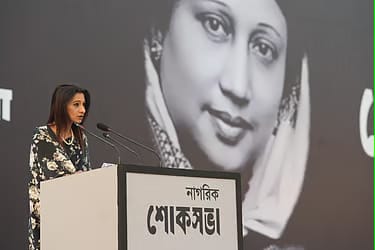
Simeen Rahman, CEO of Transcom Group and Executive Member of ICC Bangladesh, has said that Khaleda Zia’s contribution to the development of business and the economy in Bangladesh was far-reaching. She noted that Khaleda Zia’s market-oriented policies in the 1990s accelerated the growth of the private sector, trade, and investment.
Simeen Rahman, CEO of Transcom Group and Executive Member of ICC Bangladesh, has said that Khaleda Zia’s contribution to the development of business and the economy in Bangladesh was far-reaching. She noted that Khaleda Zia’s market-oriented policies in the 1990s accelerated the growth of the private sector, trade, and investment.
Simeen Rahman made these remarks on Friday afternoon at a citizens’ condolence meeting organized in memory of BNP Chairperson and former Prime Minister Khaleda Zia. The event was held at the South Plaza of the National Parliament Building on Manik Mia Avenue in the capital. Leading politicians, diplomats, journalists, development practitioners, academics, researchers, editors, business leaders, and people from various professions attended the gathering. The program concluded around 5:30 pm.
Referring to Khaleda Zia’s uncompromising principles as a person, Simeen Rahman said that during Khaleda Zia’s tenure, the economy was institutionally strengthened through the introduction of VAT policy, financial sector reforms, and the establishment of the Privatization Board and the Securities and Exchange Commission. Remittance inflows and export growth were further accelerated, she added.
Simeen Rahman highlighted Khaleda Zia’s particularly notable contribution to the readymade garment sector. She also said that the 1994 National Drug Policy led to qualitative improvements in the pharmaceutical industry, increased research, and higher investment. As a result, Bangladesh is now 100 percent self-sufficient in pharmaceuticals—an exceptional example among developing countries, she noted.
Simeen Rahman said Khaleda Zia always believed that business must be conducted ethically and that development should be rooted in values. She mentioned that she had seen these qualities reflected in the life and work of her father, the late Latifur Rahman, founder chairman of Transcom Group. She said she personally heard many times from her father that Khaleda Zia always encouraged businesspeople to conduct business ethically and in the right way, and that her inspiration and leadership behind the development of such values were quiet, yet powerful.
Simeen Rahman added that Khaleda Zia is no longer with us today, but her sacrifice, determination, and quiet courage will live on. She said Bangladesh has not lost her, but has immortalized her in history.
The program began after 2:30 pm on Friday with recitation from the Holy Quran. Condolence messages in memory of Khaleda Zia were read by Saleh Uddin, Executive Editor of The Daily Ittefaq. Speakers at the meeting included writer Faham Abdus Salam, Basudeb Dhar, Khaleda Zia’s physician FM Siddiqi, Debashish Roy, Mahmudur Rahman, Mahbubur Rahman, Debapriya Bhattacharya, Shafik Rehman, Mohiuddin Ahmed, Mahfuz Anam, Abdus Sattar Dulal, Anwar Hashim, Simeen Rahman, SMA Fayez, Rashed Al Mahmud Titumir, Asif Nazrul, Professor Mahbub Ullah, and former Chief Justice Syed JR Modachchhir Hossain. The memorial concluded with prayers and supplication for Khaleda Zia.
BNP Acting Chairman Tarique Rahman, his wife Zubaida Rahman, their daughter Zaima Rahman, Khaleda Zia’s younger son Arafat Rahman Koko’s wife Shamila Rahman, and other family members attended the condolence meeting. Also present were Special Assistant to the Chief Adviser Professor Ali Riaz, Monir Haider, BNP Secretary General Mirza Fakhrul Islam Alamgir, Standing Committee members, advisers, and other senior leaders of the party.